News & Awards

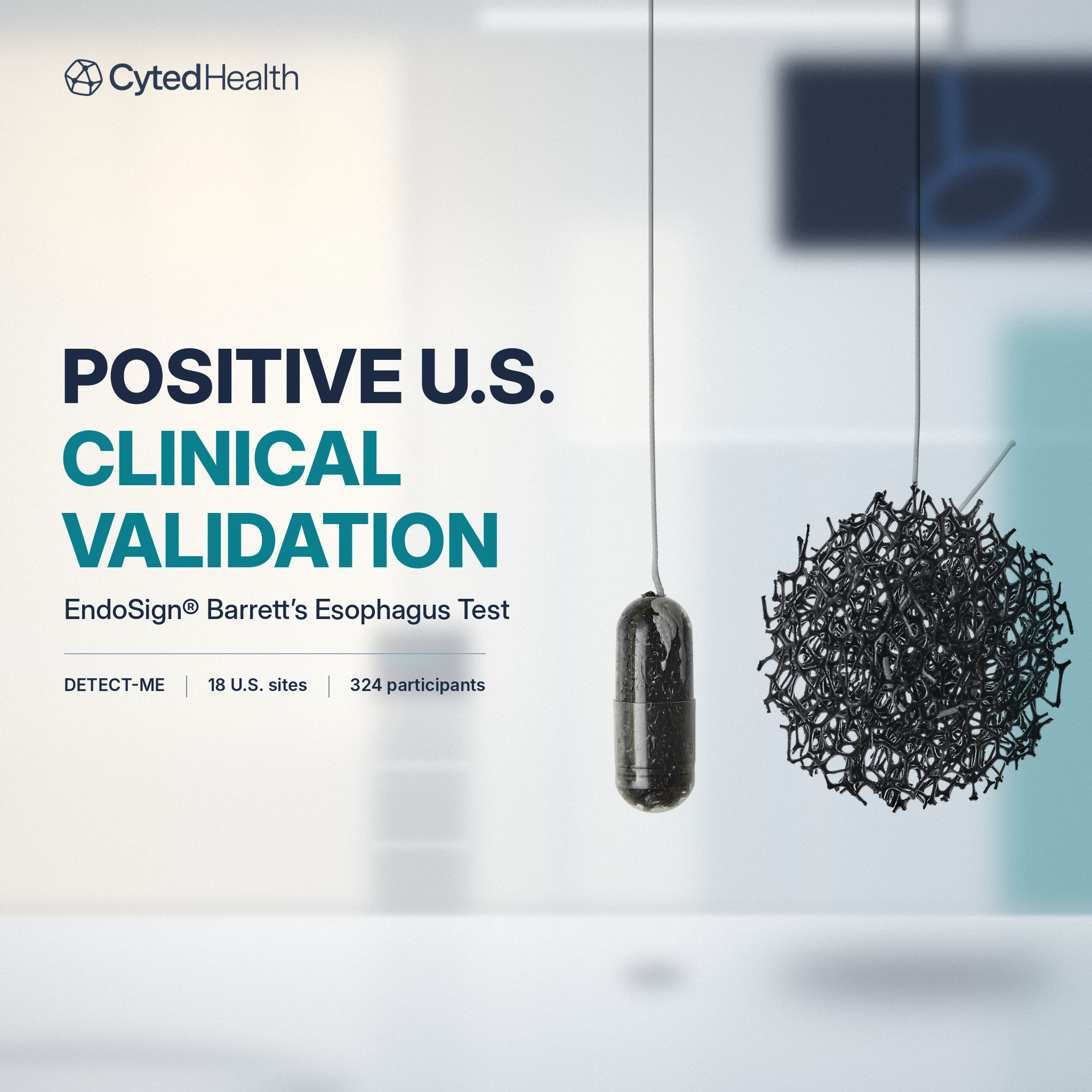
Cyted Health today announced positive clinical validation data from DETECT-ME, a prospective, multicenter study of the EndoSign® Barrett’s Esophagus (BE) Test. Conducted at 18 U.S. clinical sites, the study compared Cyted’s non-endoscopic, methylation-based test directly against standard endoscopy and biopsy, using samples collected with the FDA 510(k)-cleared EndoSign® Cell Collection Device.
The data was presented at the American College of Gastroenterology (ACG) Annual Scientific Meeting in Nashville, Tennessee during the Wednesday October 14, 2026 Plenary Session 4A: Esophagus / Practice Management, #64: A Prospective, Multicenter Cohort Study of a Novel Methylation Biomarker Panel Using Non-Endoscopic Cell Collection to Detect Barrett’s Esophagus – The DETECT-ME Study (Late-Breaking Abstract).
Barrett’s esophagus, the only known precursor to esophageal adenocarcinoma, is dramatically underdiagnosed. The challenge is not confirming Barrett’s esophagus with endoscopy; it is that many at-risk patients never reach endoscopy in the first place. DETECT-ME validates a different model: a cell collection procedure, performed without sedation , combined with molecular testing in Cyted’s CLIA-certified, CAP-accredited U.S. laboratory to identify the patients who should be referred for endoscopy.
Key findings from 324 participants:
- 90% overall sensitivity and 86% specificity for Barrett’s esophagus
- 100% sensitivity for dysplasia and esophageal adenocarcinoma, the patients for whom early detection matters most
- 99% sensitivity for long-segment Barrett’s esophagus
The study achieved 95% sampling success with no device-related adverse events, while 82% of patients rated tolerability as excellent.
“Diagnosing Barrett’s esophagus with endoscopy isn’t where things break down. The gap is that too many people at risk never reach an endoscopy in the first place,” said Marcel Gehrung, CEO and Co-Founder of Cyted Health. “With DETECT-ME, we now have U.S. validation of a simpler, more accessible way into the diagnostic process, so we can reach patients sooner, before their condition progresses and while surveillance and treatment can still have a real impact.”
“The DETECT-ME results are encouraging because the test performed best exactly where it matters most: in long-segment Barrett’s and in patients with dysplasia or early cancer, the groups at highest risk of death from esophageal adenocarcinoma,” said Nick Shaheen, Professor of Medicine & Senior Associate Dean for Clinical Research at the University of North Carolina School of Medicine, and member of Cyted Health Scientific Advisory Board. “Participants tolerated the capsule sponge well, and sampling succeeded in over 95%. Together, these findings suggest that capsule-sponge sampling with methylation testing could open a path to screening many more at-risk people and, ultimately, to reducing deaths from esophageal cancer.”
The EndoSign® Barrett’s Espophagus Test does not replace diagnostic endoscopy. A “Barrett’s Signal Detected” result requires confirmatory evaluation by endoscopy, allowing the test to help direct endoscopy resources toward the patients most likely to benefit.

Cyted Health, a leading gastrointestinal molecular diagnostics company, today announced the appointment of Thomas West as Chair of its Board of Directors and Non-Executive Director, and the appointment of Robert Epstein as a Non-Executive Director, to support the company’s continued commercial growth across the US and UK.
West (pictured) is a seasoned medtech executive with more than 35 years of experience leading and advising medtech organizations. He served as President, CEO and Director of Nalu Medical, a neurostimulation device company providing solutions for chronic pain, which was acquired by Boston Scientific in January 2026 for $600 million. Prior to Nalu, West was the President and CEO of Intersect ENT, an ear, nose and throat company, which was sold to Medtronic for $1.1 billion in May 2022. He led Hologic’s global molecular diagnostic business and has broad healthcare experience from his 23-year tenure with Johnson & Johnson. West serves on the Boards of Directors of Ceribell (neurologic conditions), SI-BONE (orthopedic implants) and ViCentra (diabetes).
Epstein similarly brings more than 35 years of leadership and advisory experience across diagnostics, life sciences and healthcare. He is Chairman of the Board at Veracyte, a genomic diagnostics company, and serves on the Boards of Fate Therapeutics, Tasso Inc, PinxDx and the Estonian Multiomics Company(EMC). He previously served on the Board of Illumina and chaired Decipher Biosciences before its acquisition by Veracyte. Earlier in his career, Epstein spent more than two decades at Medco Health Solutions, including as Chief Medical Officer and Chief Research and Development Officer.
“Cyted's Board gets stronger today with Tom joining as Chair and Robert as a Non-Executive Director,” said Marcel Gehrung, CEO and Co-founder of Cyted Health. “Their appointments significantly strengthen the Board as we enter our next phase of growth. Together, they bring the strategic and operational expertise needed to support Cyted in expanding adoption of our technology. I also want to thank our previous Chair, Gail Marcus, for her leadership and invaluable contributions in helping Cyted reach so many important clinical and commercial milestones.”
Tom West added, “I am joining Cyted at a pivotal moment in the company's development. Esophageal conditions continue to carry a poor prognosis in large part due to late-stage diagnosis,and addressing that requires a platform with genuine clinical credibility. Cyted has built this platform and validated it at scale across tens of thousands of patients, with an evidence base that stands up to scrutiny. I look forward to working closely with Marcel and the Board to ensure that rigor translates into the commercial reach this technology deserves.”
Robert Epstein added, “Cyted is addressing a critical gap in the early detection of esophageal disease with a platform that combines strong clinical evidence with clear commercial potential. I am pleased to join the Board at this important stage and look forward to supporting the company as it expands access to earlier, more accurate diagnosis for patients in the US and beyond.”

Cyted Health's EndoSign® capsule sponge test is now available in high street pharmacies for the first time, through a pilot funded by the NHS Cancer Programme in England.
Persistent heartburn and acid reflux are so common that many people manage them for years with over-the-counter medication unaware that ongoing symptoms can signal an underlying esophageal condition such as Barrett's esophagus, a precursor to esophageal cancer.
Testing closer to home gives more options to patients.
The pilot brings early detection directly into the community. Instead of waiting for a hospital referral, patients with persistent heartburn can now be tested during a short pharmacy appointment.
Carmen Norrmington-Rodriguez, 51, an early participant, had avoided repeat endoscopies for years because of the stress involved. After taking the test at her local pharmacy, she said the procedure was simple and painless, and she was back to her day within half an hour. Her results came back clear a couple of weeks later: "I can't believe how easy it was and how much peace of mind it's given me."
Watch the BBC East Midlands Today feature here starting at 18:46:16.
Cyted Health, a leading gastrointestinal molecular diagnostics company, today announces its US laboratory has achieved College of American Pathologists (CAP) accreditation, the gold standard for laboratory excellence. The accreditation builds on the laboratory’s Clinical Laboratory Improvement Amendments (CLIA) certification obtained in January 2024.
Cyted Health is presently running the DETECT-ME clinical validation study, which has been enrolling patients across multiple sites in the US since March 2025. This study will validate clinical performance of Cyted Health’s newest assays, molecular tests for the detection of esophageal conditions using EndoSign®.
“Achieving CAP accreditation reflects Cyted Health’s commitment to the highest standards in laboratory practice, recognizing our dedication to excellence and precision in detecting esophageal diseases earlier,” said Betsy Hanna, President and US General Manager, Cyted Health.
CAP accreditation is widely recognized as the industry leading benchmark for pathology and laboratory medicine. It confirms robust operational measures, technical proficiency and exemplary standards of quality assurance and control. Paired with the existing CLIA certification, regulated by the US Centers for Medicare & Medicaid Services, this accreditation further confirms Cyted Health’s laboratory practices as industry leading.
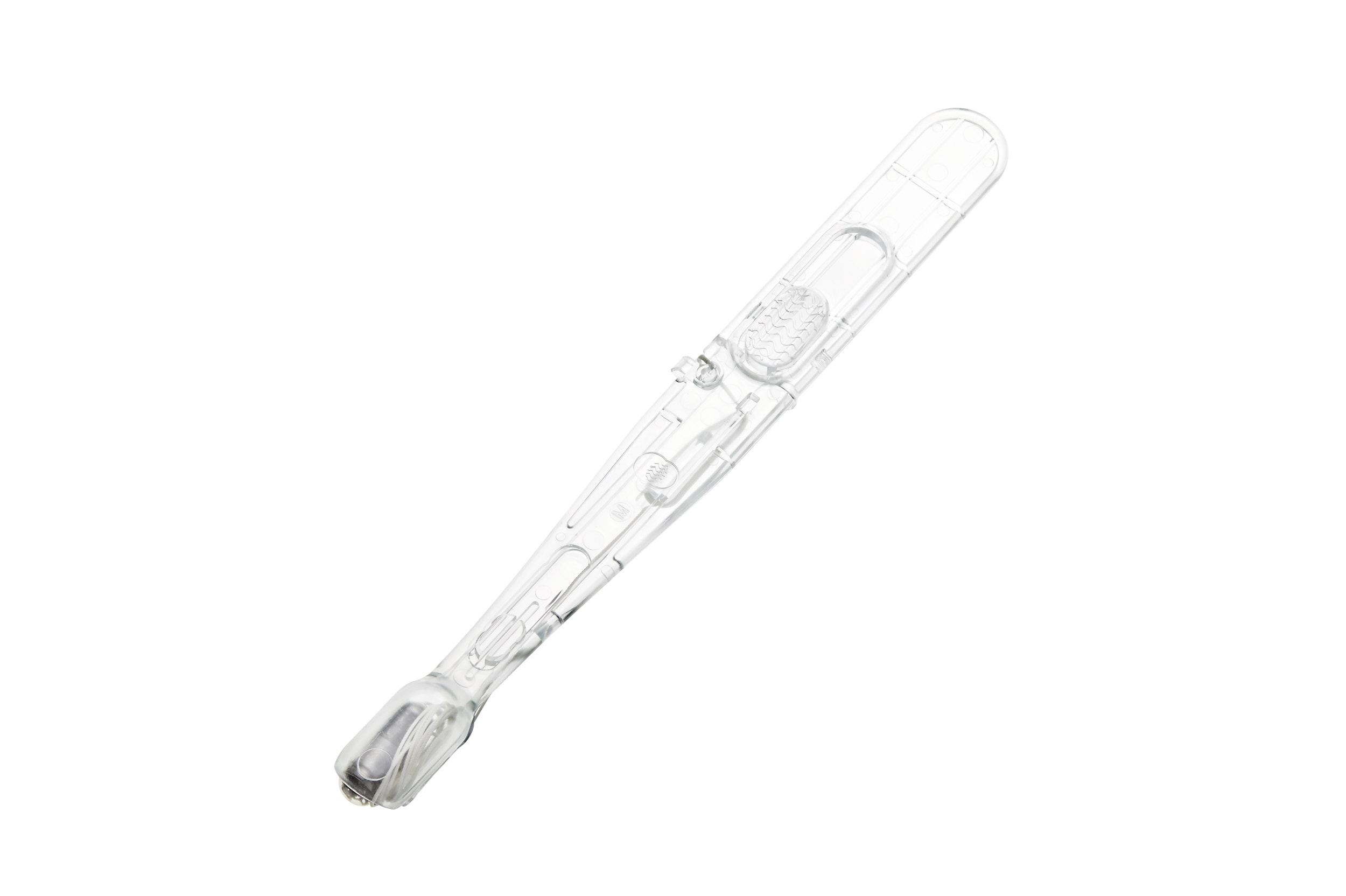
Cyted Health today announces the publication of its article, “Feasibility of primary care-based early detection of Barrett’s oesophagus and oesophageal adenocarcinoma in patients with reflux using capsule sponge testing: real-world insights from the CYTOPRIME 2 Study” in Frontline Gastroenterology, the peer-reviewed official publication of the British Society of Gastroenterology and the British Medical Journal.
The CYTOPRIME 2 Study, commissioned and funded by the NHS Cancer Programme, with the support of SBRI Healthcare and the Accelerated Access Collaborative, was designed to assess the feasibility of implementing capsule sponge testing, EndoSign®, with biomarkers in a real-world community care setting for the earlier detection of Barrett’s Esophagus (BE), supporting intervention to prevent the development of late-stage esophageal adenocarcinoma (EAC) and improve survival rates.
More than 1,800 patients with chronic gastro-esophageal reflux disease (GERD) were identified through primary care records and invited for a capsule sponge test in a community setting.
The data published supports the use of minimally invasive capsule sponge testing in a community setting for the diagnosis of BE and early-stage EAC in a target population of patients with GERD. This enables patients diagnosed with BE to be offered risk-based surveillance to detect precancerous changes and target endoscopic therapies to prevent late-stage EAC.
“The CYTOPRIME 2 Study has shown that capsule sponge testing is an effective method for detecting BE and EAC in primary care,” Dr Marcel Gehrung, CEO and Co-founder of Cyted Health, commented. “The results will be used to further expand the use of EndoSign® in the community, equipping primary care providers with a diagnostic tool that expands patient access and improves the earlier detection of EAC”.
In September 2025, Cyted secured $44 million in Series B financing to accelerate its US expansion. This follows the launch of its DETECT-ME clinical validation study, which has been enrolling patients across multiple sites in the US since March 2025. The study is validating the clinical performance of Cyted’s newest assays and molecular tests for the detection of esophageal conditions using EndoSign®.

Cyted Health, a leading gastrointestinal (GI) molecular diagnostics company, today announces a first close of $44 million in its Series B financing round to accelerate its ongoing US expansion.
The round was led by EQT Life Sciences, investing through its EQT Health Economics strategy, and co-led by Advent Life Sciences and British Business Bank with continued support from existing investors Morningside and BGF.
The financing will be used to accelerate the commercial expansion of Cyted’s diagnostics platform in the US, consolidate existing commercial success across the UK, and expand its portfolio of advanced diagnostic tests. Cyted’s existing platform consists of EndoSign®, an FDA 510(k)-cleared device enabling minimally invasive collection of esophageal cells, and advanced biomarker molecular testing for the detection of esophageal conditions.
Cyted’s technology has already demonstrated significant success across the UK’s National HealthService, completing over 35,000 tests and building a robust portfolio of peer-reviewed publications proving unmatched patient acceptability and real-world clinical impact. Esophageal cancer is considered one of the deadliest cancers globally, with a survival rate of only 20%.
“This Series B financing marks a defining moment for Cyted as we continue to deepen our commitment to detecting esophageal diseases earlier,”said Marcel Gehrung, CEO and Co-founder of Cyted Health. “This investment will help us consolidate our leading position in the market by expanding our US presence and adding new life-saving innovations to our advanced diagnostics portfolio.”
Bruno Holthof, Partner at EQT Life Sciences, commented: “Cyted is strongly positioned to redefine the standard of care in upper GI diagnostics worldwide.Its minimally invasive diagnostics platform is the standout innovation to capture this significant market opportunity, and we’re delighted to add the company to our portfolio.”
“Cyted has demonstrated a rare combination of clinical innovation, patient-centered delivery, and commercial execution with an impressive foundation in the UK. We’re proud to support its next phase of growth,” said Kaasim Mahmood, General Partner at Advent Life Sciences.
Carmine Circelli, Director, Life Sciences at British Business Bank, added: “Cyted is an excellent example of the kind of high-impact business we aim to back. Their innovation has the potential to transform early cancer detection and create lasting health outcomes both in the UK and globally.”
Science Minister Lord Vallance said: "I am pleased to see the British Business Bank back Cyted - a company whose growth demonstrates the ability of our universities to turn world-class life sciences research into successful commercial opportunities with the potential to improve people's lives. Life sciences form a critical part of this Government's ambitions for both the economy and healthcare - and through our Life Sciences Sector Plan, we will continue to support the industry to even greater success.”
Founded by leading experts at the University of Cambridge, Cyted is pioneering the development of minimally invasive cell collection coupled with proprietary biomarker discovery to transform the detection of pre-cancerous, cancerous and inflammatory esophageal conditions.
Cyted’s Series B financing round follows the recent launch of Cyted's DETECT-ME clinical validation study, which has been enrolling patients across multiple sites in the US since March 2025. This study will validate clinical performance of Cyted’s newest assays and molecular tests for the detection of esophageal conditions using EndoSign®.

Cyted Health, a leading gastrointestinal molecular diagnostics company, today announces the expansion of its advisory panel to establish a Clinical Advisory Board. The Board, comprised of leading clinicians and researchers in gastroenterology and oncology, will provide strategic guidance as Cyted builds its portfolio of diagnostics for esophageal disease and widens its footprint in the US.
The growth of the Clinical Advisory Board follows the launch of Cyted's DETECT-ME clinical validation study, which has been enrolling patients across multiple sites in the US since March 2025. This study will validate clinical performance of Cyted’s newest assays, molecular tests for the detection of Barrett’s esophagus (BE) and esophageal neoplasia, including esophageal adenocarcinoma (EAC), using Cyted's non-endoscopic, FDA 510(k)-cleared, EndoSign® cell collection device.
Professor Rebecca Fitzgerald OBE (pictured) who is one of Cyted’s Co-founders and currently acts as Clinical Advisor to Cyted Health, will lead the Clinical Advisory Board to support Cyted Health’s portfolio and geographic expansion.
Fitzgerald is Professor of Cancer Prevention and Director of the Early Cancer Institute at the University of Cambridge. One of the world’s leading experts in BE and EAC, Fitzgerald has pioneered the development of minimally invasive cell sampling coupled with biomarker tests for diagnosing upper gastrointestinal conditions.
“These clinical and academic leaders will play an instrumental role in shaping Cyted’s portfolio of advanced diagnostic tests as we expand our presence in the United States.” Marcel Gehrung, CEO and Co-founder of Cyted Health, commented. “Their combined expertise will guide our clinical strategy and ensure that our innovations effectively meet the needs of patients and healthcare providers in our shared goal to reduce mortality from esophageal adenocarcinoma.”
Cyted Health has already demonstrated significant success across the UK’s National Health Service (NHS), where it has completed over 30,000 tests, building a robust portfolio of peer-reviewed publications and real-word data. Widespread adoption of Cyted Health’s technology in the UK’s NHS has led to earlier-stage cancer detection and improved patient outcomes.
The following distinguished clinicians will join Professor Rebecca Fitzgerald OBE on the Clinical Advisory Board:
Julian Abrams, MD, MS
Dr Julian Abrams, MD, is a Professor of Medicine and Epidemiology at Columbia University Medical Centre. He is the Director of Clinical Research for the Division of Digestive and Liver Diseases. He specialises in caring for patients with Barrett’s esophagus and early esophageal cancer. Dr Abrams research looks at disease biomarkers, promoters of neoplasia and targets for chemoprevention.
Jacques Bergman, MD PhD
Dr. Jacques Bergman is Professor of Gastrointestinal Endoscopy at Amsterdam’s University Medical Centre. An expert in risk-stratification of Barrett esophagus, endoscopic detection and treatment of early Barrett’s neoplasia, he has authored and co-authored over 450 peer reviewed publications.
Neena Mohan MD, FACP
Dr. Neena Mohan is a gastroenterologist and Associate Professor at the Lewis Katz School of Medicine at Temple University in Philadelphia. Dr. Mohan specializes in the diagnosis and endoscopic management of Barrett’s Esophagus and esophageal cancer. Her research and published papers explore evaluation of Barrett's Esophagus risk factors, diagnostic approaches, surveillance techniques and endoscopic treatments. Dr. Mohan has worked extensively in educational leadership roles and advocacy in medicine. She has also served on several national committees with the ACG and ASGE and is a reviewer for multiple journals.
Nicholas J. Shaheen, MD, MPH
Dr Shaheen is the Senior Associate Dean for Clinical Research at the University of North Carolina and Co-Director of the North Carolina Translational and Clinical Research Centre. His work on Barrett’s Esophagus, GERD and eosinophilic esophagitis is highly respected, and he is the author of over 400 publications.
Sachin Wani, MD, FASGE, AGAF
Dr Wani is a Professor of Medicine in the Division of Gastroenterology at the University of Colorado Anschutz Medical Campus and serves as the Executive Director of the Katy O and Paul M Rady Esophageal and Gastric Center of Excellence. Dr Wani has overseen clinical trials of non-endoscopic testing for Barrett’s Esophagus and is highly committed to driving forward innovation in the sector.
Evan S. Dellon, MD, MPH
Evan Dellon, MD, is a Professor of Medicine and Adjunct Professor of Epidemiology at the University of North Carolina School of Medicine. He is Director of the UNC Center for Esophageal Diseases and Swallowing. He specialises in caring for patients with eosinophilic esophagitis (EoE) and other eosinophilic gastrointestinal diseases (EGIDs). Dr Dellon’s research focuses on improving diagnosis, treatment and monitoring of EoE and EGIDs.

Cyted Health, a leading gastrointestinal molecular diagnostics company, today announces the enrollment of the first patients in the DETECT-ME clinical validation study (NCT06803927). The study evaluates Cyted Health’s advanced molecular assays using esophageal cells collected with the FDA 510(k)-cleared EndoSign® cell collection device to detect Barrett’s Esophagus (BE) and esophageal adenocarcinoma (EAC).
The DETECT-ME study, co-led by principial investigators Dr. Nick Shaheen (Professor of Medicine & Senior Associate Dean for Clinical Research at the University of North Carolina School of Medicine) and Dr. Sachin Wani (Professor of Medicine, Gastroenterology, University of Colorado Anschutz Medical Center, Executive Director, Rady Esophageal & Gastric Center of Excellence), will enroll individuals across 18 sites in the US. This study builds upon Cyted Health’s extensive portfolio of peer-reviewed research and real-world clinical experience in the UK, where its technology has been widely adopted.
EAC is a significant public health concern due to its rising incidence, late-stage diagnosis, and high mortality. According to SEER (Surveillance, Epidemiology, and End Results program) data, over 22,000 new cases and more than 16,000 deaths from esophageal cancer occurred in the US in 2024, with a five-year survival rate of just 22%. The vast majority of EAC patients—approximately 90%—have never been diagnosed with its only known precursor, Barrett’s Esophagus, underscoring the need for improved early detection strategies.
Endoscopy with biopsy remains the standard of care for diagnosing BE and EAC, but additional tools are needed to help identify at-risk individuals sooner. Cyted Health’s approach combines minimally invasive cell collection with advanced diagnostics. It delivers a clinically proven detection method, backed by real-world evidence, that significantly enhances early identification of Barrett’s Esophagus and EAC thereby enabling timely therapeutic intervention.
“Early and accurate detection of Barrett’s Esophagus is essential,” said Dr. Nick Shaheen. “The DETECT-ME study will generate essential data on the performance of this minimally invasive diagnostic approach. By refining our detection methods, we can improve early identification of at-risk patients and support more effective clinical decision-making.”
“This study represents an important advancement in evaluating minimally invasive diagnostics for Barrett’s Esophagus and esophageal cancer,” added Dr. Sachin Wani. “By generating robust clinical data, we can better understand how these tools complement existing diagnostic pathways and enhance early detection efforts.”
Cyted Health has already demonstrated success in the UK, where widespread adoption of its technology has led to earlier-stage cancer detection and improved patient outcomes. The company is now actively progressing its US evidence plan to support the broader clinical adoption of its platform leveraging the EndoSign cell collection device.
Ms. Betsy Hanna, President & General Manager of Cyted Health, added, “We are committed to ensuring every at-risk patient in the US has access to the right diagnostic pathway. By expanding minimally invasive screening options, we can identify more BE cases early, allowing patients to receive appropriate clinical care before progression to EAC.”

Cyted Health is honoured to announce that we have been awarded the Best Provider of Diagnostic Services at the HSJ Partnership Awards 2025. This prestigious award recognises our commitment to enhancing early cancer detection across the UK through our innovative, non-endoscopic diagnostic solution.
In response to the COVID-19 pandemic’s impact on endoscopy services in Scotland, Cyted partnered with NHS Scotland to introduce the capsule sponge test, a minimally invasive device designed to detect Barrett’s oesophagus and early signs of oesophageal cancer. This initiative aimed to alleviate pressure on endoscopy services by serving as a triaging and surveillance tool, ensuring that high-risk patients receive timely and accurate diagnoses.
Impact
The implementation of the capsule sponge test has led to significant improvements in patient care and system efficiency:
- Detection Impact: The proportion of endoscopies revealing important findings increased from under 10% to over 50%, facilitating early intervention for high-risk patients.
- Reduced Waiting Times: Waiting times for endoscopies decreased from nine months to five months, enhancing patient experience and reducing anxiety.
- Improved Resource Allocation: There was a 77% reduction in demand for follow-up endoscopies, which has unlocked operational and financial efficiencies.
This award underscores our dedication to innovation and excellence in healthcare, reflecting our ongoing efforts to improve patient outcomes and streamline healthcare processes.
We extend our gratitude to NHS Scotland for their collaboration and to the HSJ Partnership Awards for this award. We remain committed to advancing diagnostic services and improving patient outcomes through continuous innovation and partnership.
Recognizing Excellence: Our Awards and Accolades
